
Your
energy compliance
Solution
Salvis offers a comprehensive range of energy compliance and certification services, helping building owners, landlords, and developers across the UK meet their regulatory obligations while improving energy performance and reducing carbon emissions.
Our services include Energy Performance Certificates (EPC), Display Energy Certificates (DEC), Streamlined Energy and Carbon Reporting (SECR), and Building Regulations Part L Compliance.
energy Performance certificates
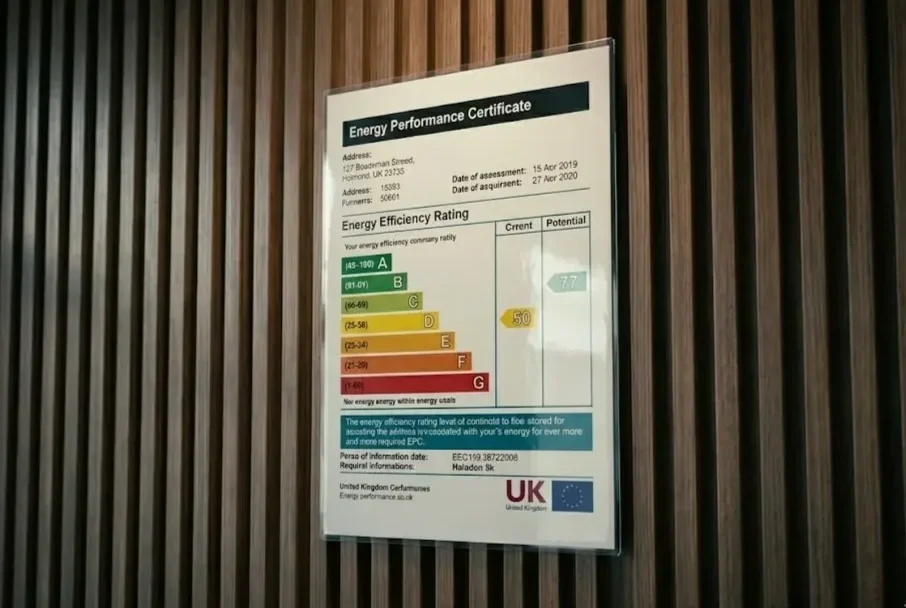
Energy Performance Certificates (EPC) are typically required for the sale, rent, or construction of buildings. They were introduced to give prospective buyers or tenants an indication of building energy performance. However, it has now evolved to make it unlawful for landlords to lease out properties with an EPC rating of F or G under the Minimum Energy Efficiency Standard (MEES).
MEES is an opportunity for the landlord and tenant to work together to reduce operational costs, improve environmental conditions, reduce carbon emissions and improve the value of the asset. Salvis provides a full EPC delivery service, undertakes the building survey, compiles the advisory report, and lodges the certificate with the accreditation body.
Display energy certificates
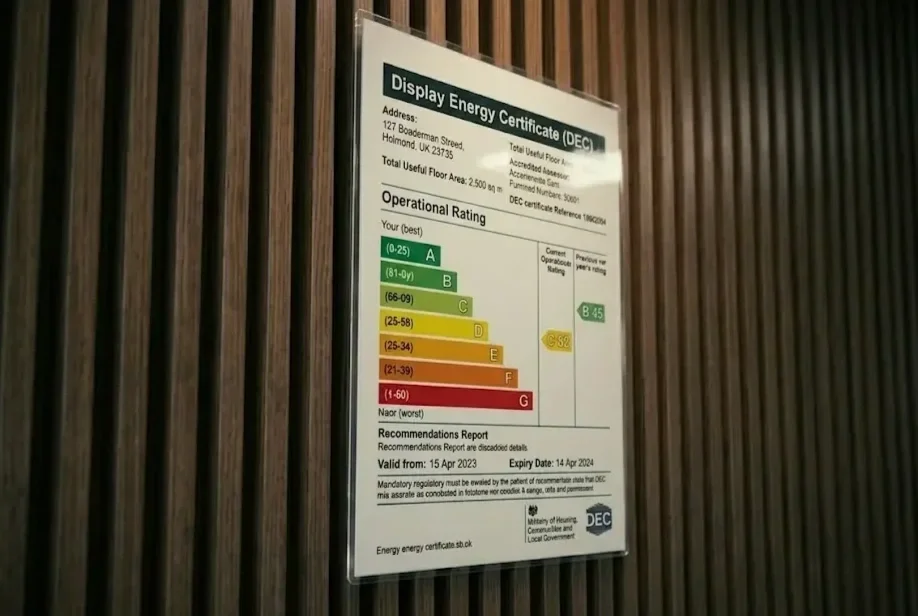
A Display Energy Certificate (DEC) is required to be displayed in all public buildings over 250m2. It is based on a building's actual energy usage and is a good way to compare its performance against others of a similar nature.
The DEC aims to highlight where improvements can be made and track energy usage over time. The lower the DEC rating, the greater the cost and carbon savings opportunity. Salvis can ensure that DECs are current and design solutions to improve the rating yearly.
At Salvis, we keep your DECs up-to-date and actively design and implement strategic solutions to incrementally improve your building's energy performance year by year, ensuring compliance while driving towards sustainability and cost-efficiency.
Streamlined energy & Carbon Reporting
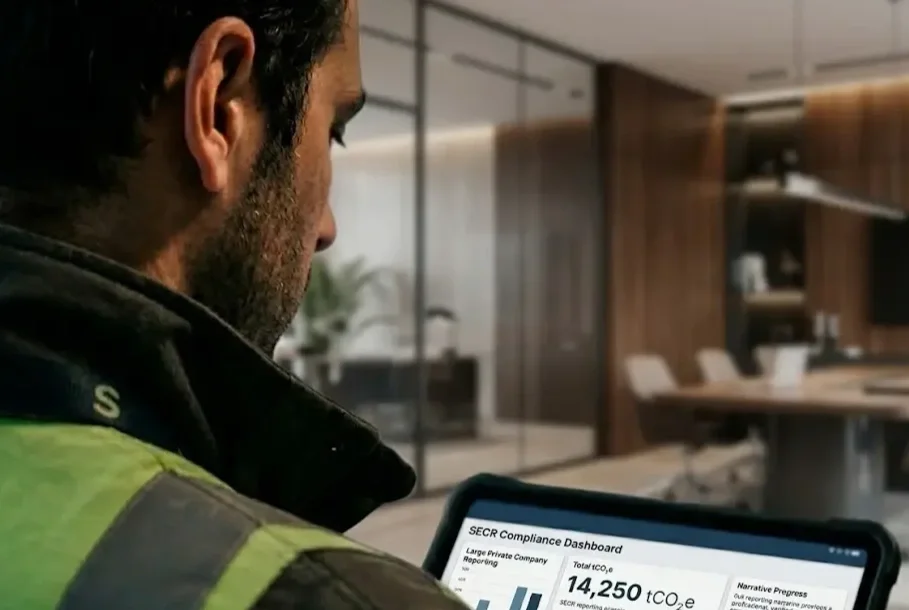
Streamlined Energy and Carbon Reporting (SECR) was introduced in April 2019, and it requires all large private companies to publicly report on their annual carbon emissions and provide details of energy efficiency measures they have undertaken over the last year.
Salvis can support gathering the data to calculate the carbon emissions, provide the narrative for the reporting, and also advise on cost-effective actions that can be undertaken to reduce energy usage.
Building Regulations Part L Compliance
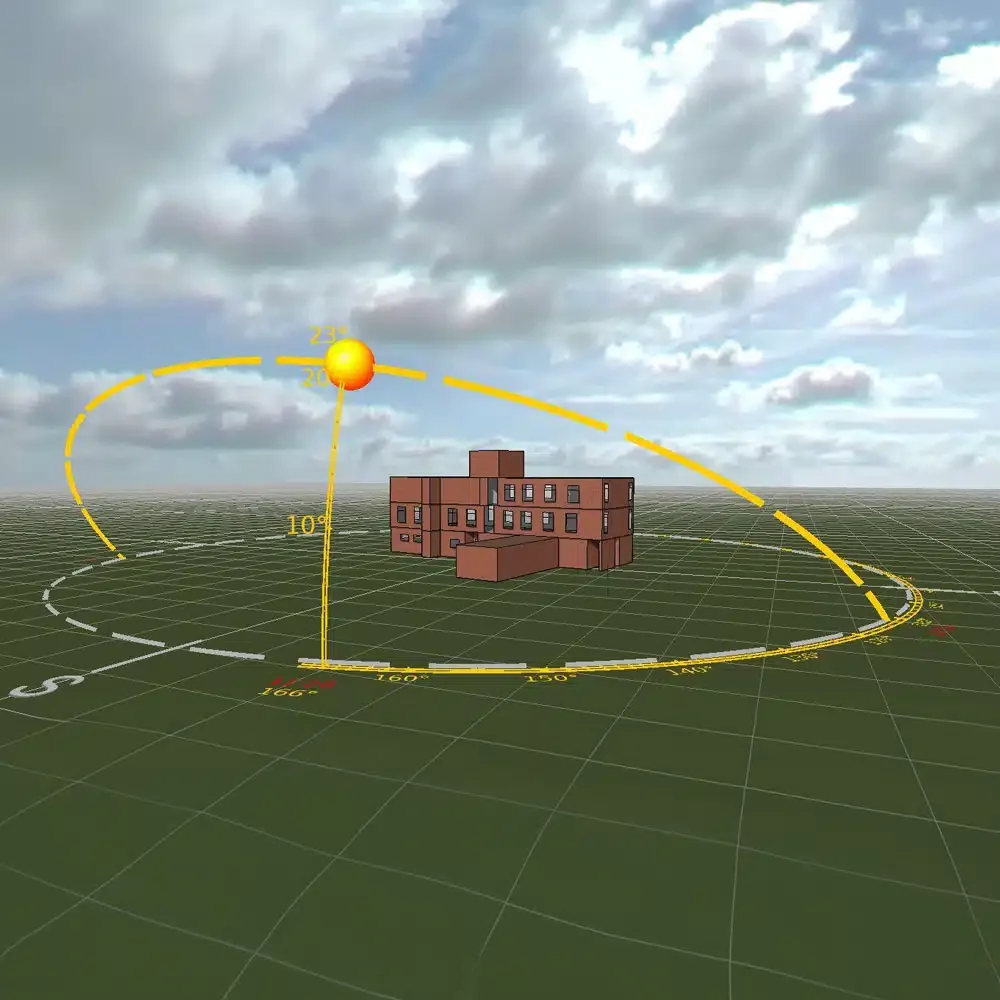
Salvis uses accredited dynamic building modelling software to model the thermal performance and energy efficiency to achieve compliance under Building Regulations Part L2 (Conservation of Fuel and Power in Buildings other than Dwellings).
This is a statutory requirement for the construction of new builds, as well as the extension or major refurbishment of an existing property.
The thermal U-values and construction elements
The building's air tightness
The type and efficiency of heating and domestic hot water systems
The building ventilation strategy
The provision of low and zero carbon and renewable technologies
The type and efficiency of the general lighting
Frequently Asked Questions
-
MEES is tightening significantly. The current minimum standard is EPC E, but future regulations are expected to require much higher performance, moving towards EPC C and ultimately EPC B for commercial buildings.
-
The exact dates for commercial properties are still being finalised. However, the expected trajectory is EPC C around 2027 and EPC B by around 2030, although final legislation is still pending.