
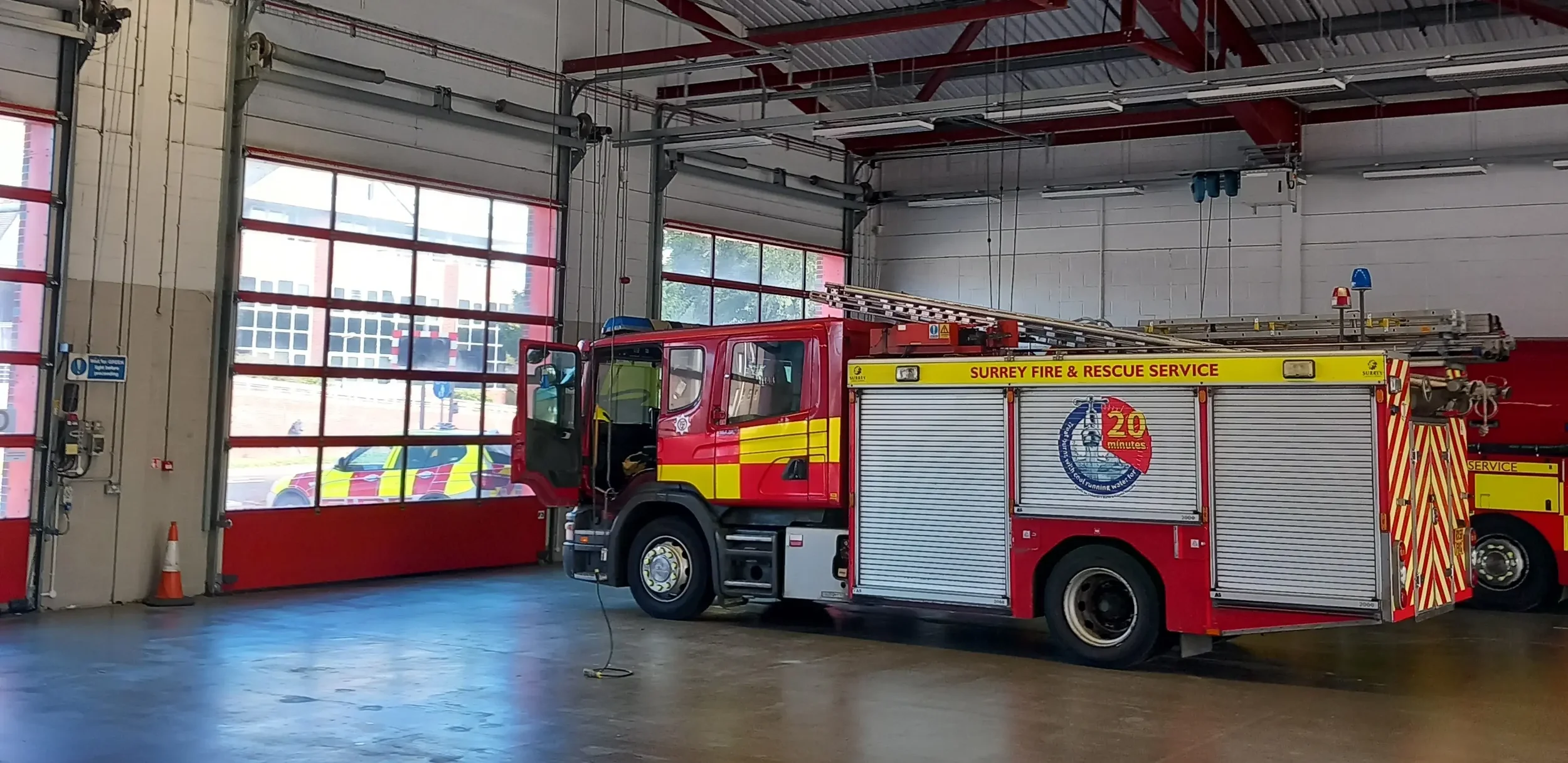
Guilford Fire Station
Heat Pump-Led Decarbonisation Strategy.
Guildford Fire Station is part of the Surrey Fire and Rescue Service, providing emergency response and community safety services to the Guildford area since 1937, with its most recent renovation in June 2015.
The Challenge:
The Solution:
Frequently Asked Questions
-
A heat loss assessment determines how much energy a building actually requires to maintain temperature. Without this, systems are often oversized or inefficient. Accurate modelling ensures the heating system is correctly sized, reduces unnecessary energy use, and allows low-carbon technologies like heat pumps to operate at optimal efficiency.
-
High pressure losses in pipework increase the energy required for pumps to circulate heating water. By analysing and optimising system pressure loss, designers can reduce electrical consumption, improve flow performance, and ensure the system operates efficiently across all areas of the building.
-
Low-temperature systems reduce overall heat demand and enable technologies such as Air Source Heat Pumps to operate more efficiently. When combined with upgraded heat emitters and an improved distribution design, they minimise heat losses and significantly lower carbon emissions compared to traditional high-temperature systems.