Scaitcliffe House
Local Authority
Decarbonisation Feasibility & Delivery
Feasibility, funding support, design and project delivery for Hyndburn Borough Council.
The Challenge:
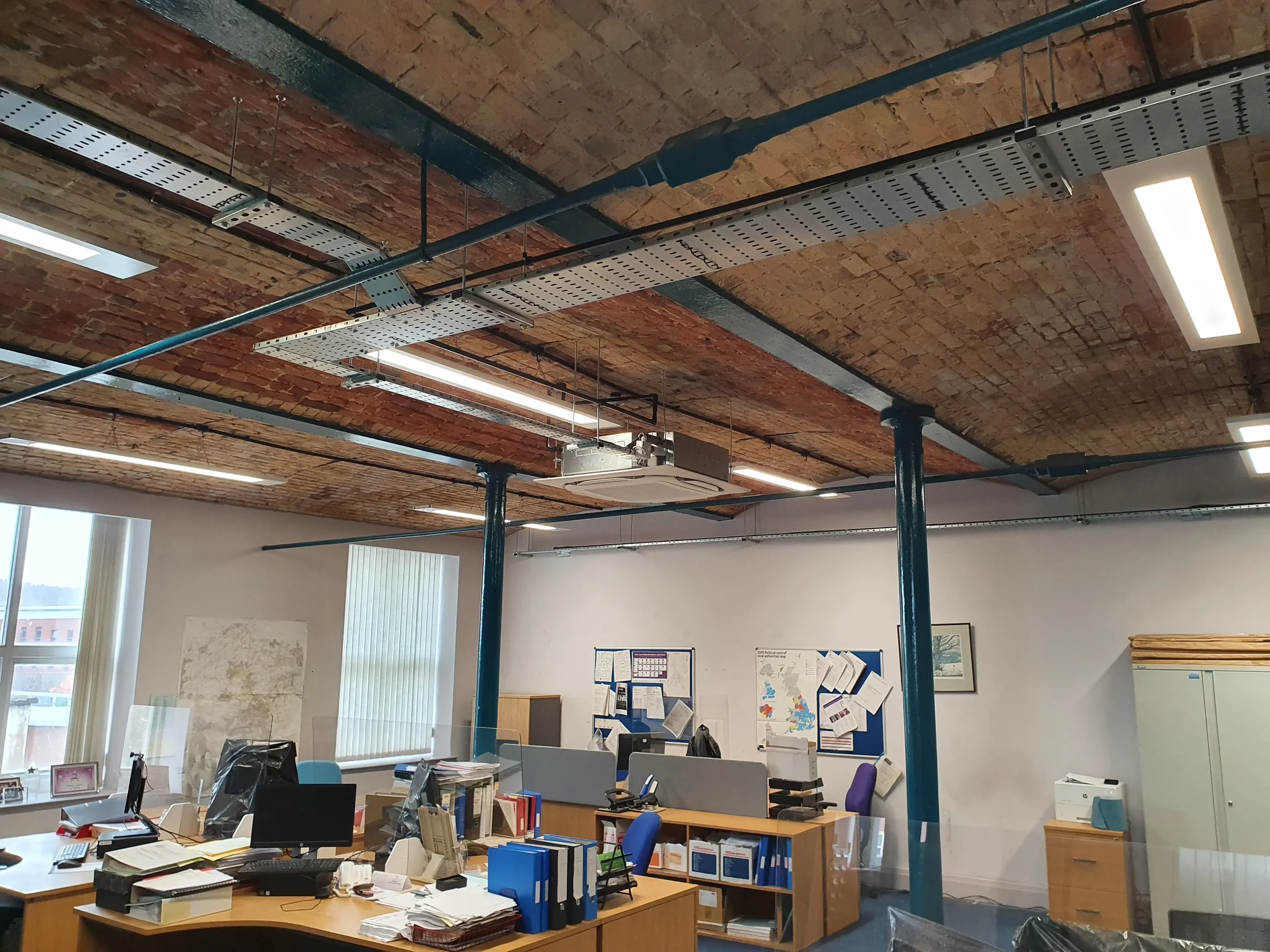
Hyndburn Borough Council appointed Salvis, in partnership with APSE Energy, to develop a decarbonisation strategy for Scaitcliffe House, the Council's headquarters. The building was served by a combination of ageing heating equipment, including existing heat pumps and electric panel heaters, leaving clear scope to improve both energy efficiency and operational performance.
The Council needed a clear pathway to reduce carbon emissions and improve occupant comfort, alongside external funding to deliver the improvements once identified.
The Solution:
Salvis delivered a complete end-to-end decarbonisation programme, supporting the Council from initial feasibility through to project delivery. Our scope covered:
The feasibility study assessed a range of technologies and identified a package of measures to achieve significant carbon savings while improving building performance: retaining the existing Daikin heat pump system where it remained effective, replacing ageing electric heating with modern Variable Refrigerant Flow (VRF) technology, and reducing electrical demand through further efficiency improvements.
The Outcome:
Following completion of the feasibility study, Salvis supported Hyndburn Borough Council with its application to the Public Sector Decarbonisation Scheme (PSDS). The application was successful, securing grant funding to deliver the proposed measures, and Salvis moved on to provide the detailed design, technical specification and project management services required to implement the scheme.
The project has helped the Council progress its commitment to becoming a net-zero organisation, creating a more efficient, comfortable and future-ready workplace for staff and visitors. It also forms part of the Council's wider ambition to achieve 100% clean energy across its operations by 2030.
-
Variable Refrigerant Flow (VRF) systems provide highly efficient heating and cooling by varying refrigerant flow to individual zones within a building, giving occupants greater control while reducing energy consumption.
-
Salvis developed the technical business case, carbon calculations, feasibility assessments and supporting documentation required for the Council's successful Public Sector Decarbonisation Scheme application.
-
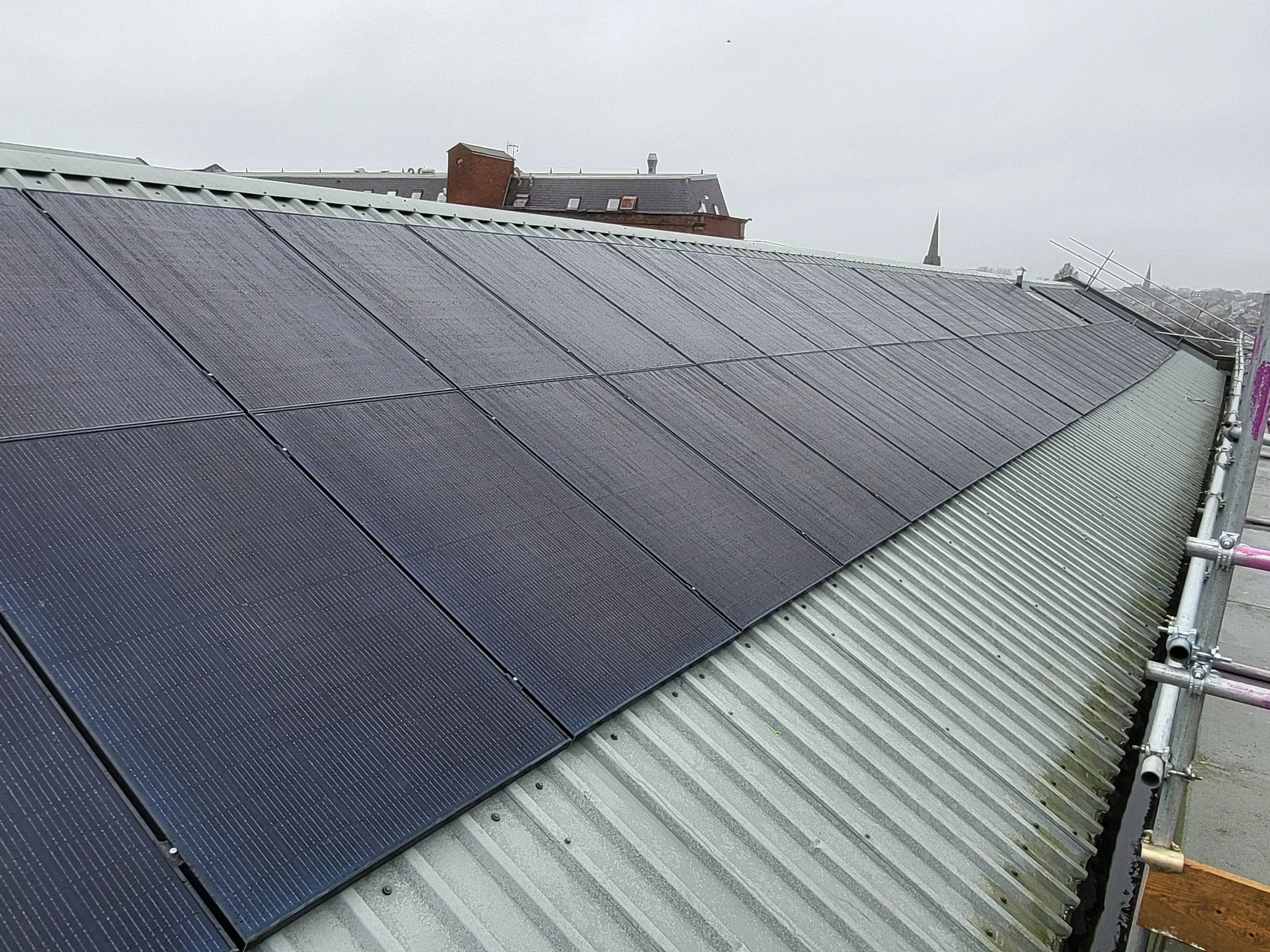
The solar PV system helps reduce the electricity imported from the grid and supports the building's long-term decarbonisation strategy and lower energy costs.
-
IES thermal modelling was used to assess building performance and support the selection and sizing of the most effective low-carbon technologies for the site.