Eastleigh House
Local Authority
Chiller Replacement Feasibility
The Challenge:
Eastleigh Borough Council commissioned Salvis to investigate replacement options for the ageing chiller plant serving Eastleigh House, with a focus on minimising energy consumption, reducing carbon emissions and improving long-term operational reliability.
The 4,915 m² office building was served by two chillers with a combined cooling capacity of 660kW, and despite previous refurbishment works and strong thermal performance, the building was experiencing issues with its existing cooling plant.
Given the building's changing occupancy patterns and high-performance fabric, a detailed assessment was needed to establish the building's actual cooling and heating demands before any replacement solution could be selected.
The Solution:
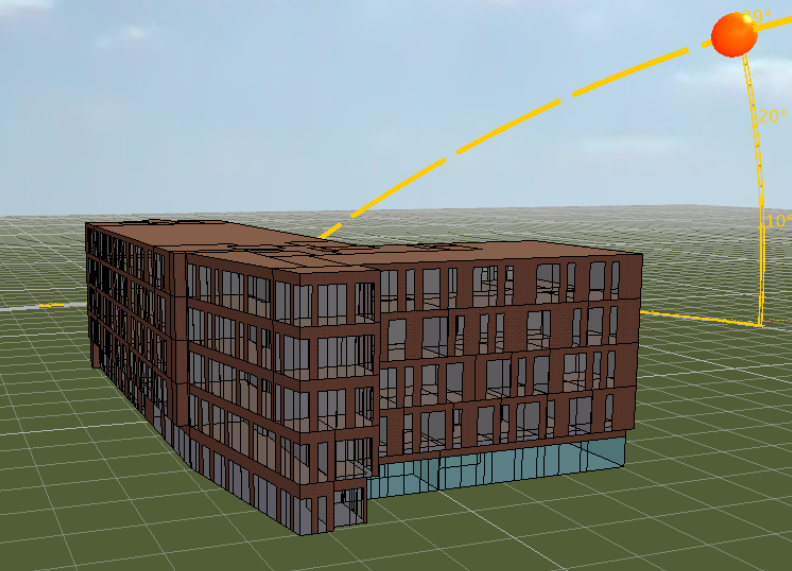
The modelling showed the building's heating and cooling requirements sat comfortably within the capacity of the existing plant, with a maximum cooling load of 539kW and a maximum heating load of 544kW, confirming the issue was one of plant suitability rather than undersizing.
The existing chillers were poorly suited to the significant fluctuations in occupancy and cooling demand for the building, which was driving reduced efficiency and operational issues at low loads.
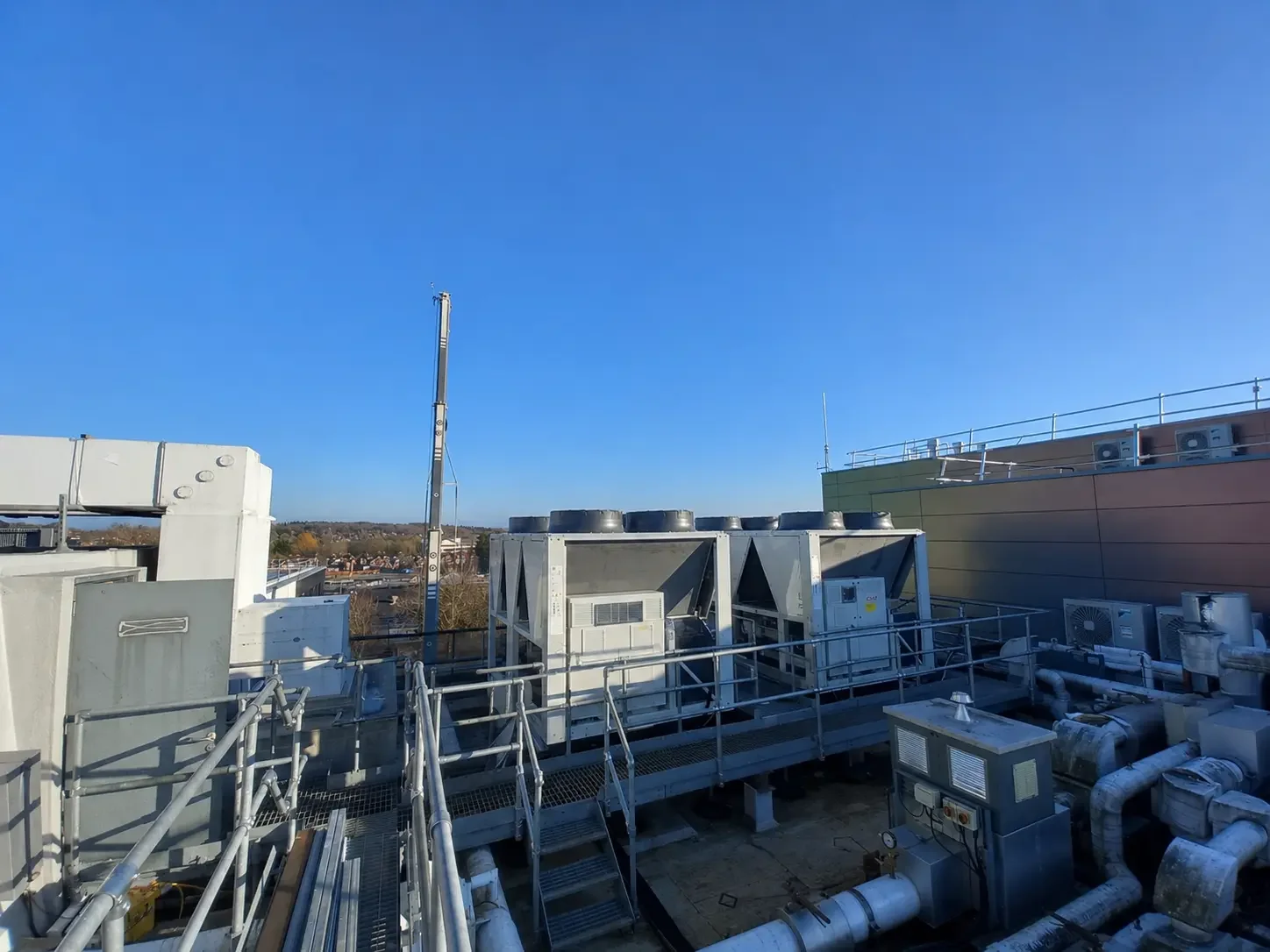
Following market testing of several manufacturers and technologies, Salvis recommended replacing the existing chillers with modern scroll compressor air-cooled units, offering multiple refrigerant circuits and compressor stages for better part-load performance, while retaining the existing secondary distribution systems and gas-fired boilers. An alternative combined heating and cooling plant solution was also evaluated but discounted due to higher capital costs, larger equipment footprints and operational constraints.
The Outcome:
The feasibility study gave Eastleigh Borough Council a clear, evidence-based strategy for replacing the existing cooling plant while maintaining operational efficiency and minimising disruption: new scroll compressor chillers, retained heating infrastructure, reprogrammed controls to improve cooling load diversification between floors, enhanced energy monitoring and BMS functionality, and annual controls reviews to maintain performance over time.
-
Scroll compressor chillers perform better under varying load conditions and offer improved capacity control through multiple compressor stages, making them more suitable for modern office buildings with fluctuating occupancy patterns.