
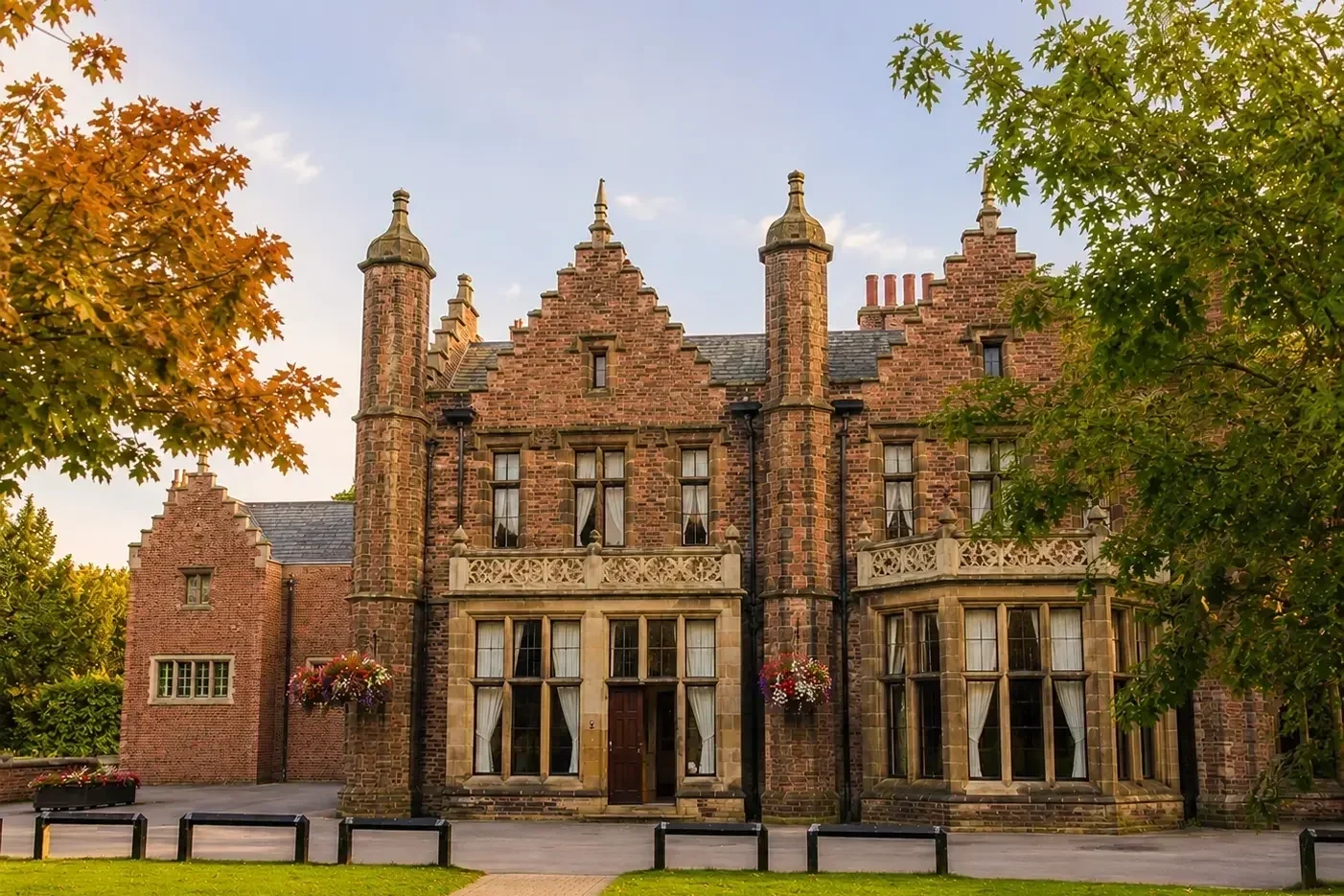
Walton Hall
Local Authority
Heat Decarbonisation Survey.
Walton Hall, built in 1836, is a Grade II listed estate owned by Warrington Borough Council. Today, it operates as a popular wedding and events venue. Although historically significant and architecturally sensitive, it presents a major challenge when it comes to heat decarbonisation.
The Challenge:
The Council needed a future-proof, low-carbon heating solution, one that would significantly reduce emissions without compromising the heritage of the building.
The Solution:
Using advanced IES heat-modelling software, we assessed multiple decarbonisation scenarios. The modelling allowed us to understand the building's thermal behaviour in detail and evaluate how each system would integrate with the existing fabric and environmental constraints of a protected heritage estate. Our assessment included:
The Outcome:
The analysis clearly identified a ground source heat pump solution as the most efficient and lowest-carbon option. Installed discreetly beneath the grounds, the GSHP provides modern, reliable heating with minimal visual impact, maintaining the estate's historic character. When combined with LED lighting upgrades and secondary glazing, the full package delivers annual savings of 76 tCO₂e. The robust feasibility study and evidence-based approach enabled Warrington Borough Council to successfully secure funding through the Public Sector Decarbonisation Scheme (PSDS).
Frequently Asked Questions
-
A ground source heat pump is a low-carbon heating system that draws on heat naturally stored in the ground to warm buildings and provide hot water. Pipes buried underground absorb this heat, and the heat pump raises it to a usable temperature.
Because ground temperatures stay relatively stable throughout the year, ground source heat pumps are highly efficient and can deliver meaningful reductions in both energy bills and carbon emissions compared with gas or oil boilers. They work particularly well in buildings with space for ground loops and low-temperature heating systems such as underfloor heating or oversized radiators.
-
A hybrid system pairs an air source heat pump with an electric boiler so that two heating technologies work together. The heat pump delivers low-carbon, energy-efficient heating for the majority of the year, while the electric boiler steps in as a backup or top-up during periods of higher demand or when greater temperatures are needed.
This combination offers both flexibility and resilience, allowing buildings to benefit from the efficiency and carbon savings of a heat pump without compromising on comfort. Hybrid systems are especially useful where existing heating infrastructure needs support, space is limited, or a full heat-pump-only solution is not practical.