
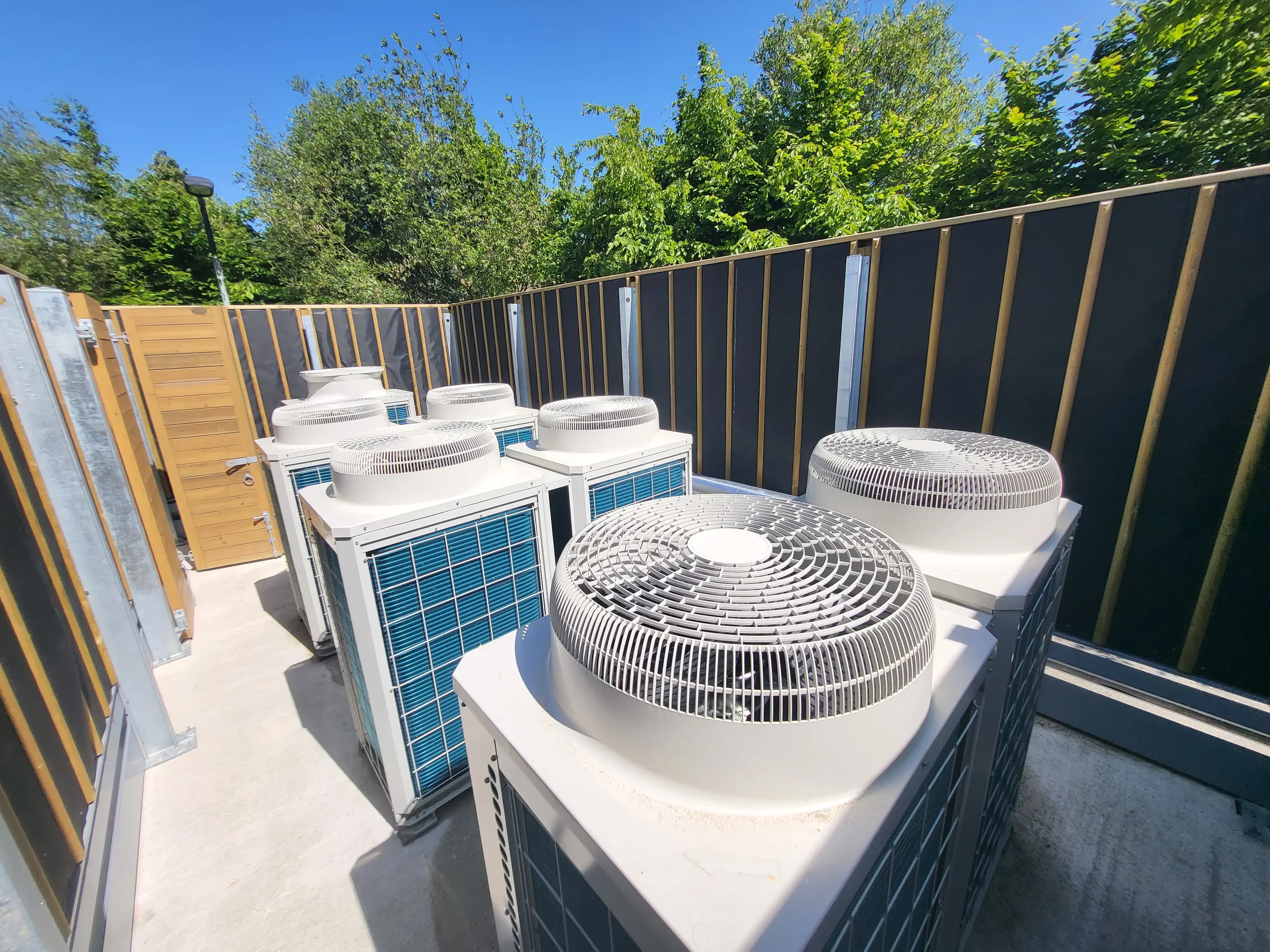
Southfield plant replacement
NHS Healthcare
Plant Replacement Plan.
Southfield Hospital required a reliable, energy-efficient replacement for their ageing gas-fired boilers. We installed a complete Mitsubishi air source heat pump system, supported by a 1000L AO Smith buffer tank, new pipework, controls, and electrical integration.
The Challenge:
The existing gas-fired boilers (2x Hamworthy Warmwell, 54 kW each, installed 2004) had suffered recent failures, showed corrosion, lacked proper safety relief valves, and the secondary pump was suspected to be oversized.
The Solution:
We replaced the outdated gas boiler heating plant with a fully electric air-source heat pump system using Mitsubishi units and a 1000 litre AO Smith buffer. The project was successfully delivered within a 5-week programme and included:
Results & Impact:
By transitioning from failing gas infrastructure to a modern, fully electric air source heat pump system, Southfield Hospital has future-proofed its heating capabilities while achieving a 17.59% increase in overall system capacity. The upgraded plant room now operates with vastly improved reliability, lower carbon emissions, and advanced control systems, ensuring a safer, warmer, and more sustainable environment for both staff and patients for decades to come.
Frequently Asked Questions
-
Air source heat pumps offer a highly efficient, low-carbon heating solution that replaces fossil fuel systems. They deliver three to four times more heat energy than the electricity they consume, which means significant long-term savings on energy bills alongside measurable carbon reductions. For organisations working toward net zero or looking to future-proof their buildings against tightening regulations, heat pumps are increasingly the default choice.
-
Air source heat pumps typically last between 15 and 20 years, with well-maintained systems often exceeding two decades. That is generally longer than traditional gas boilers, which tend to last 10 to 15 years. Combined with lower running costs and reduced maintenance requirements, this makes them a durable, cost-effective long-term heating solution.
-
Yes. Public sector organisations can apply for funding through schemes like the Public Sector Decarbonisation Scheme, and private sector or domestic projects may be eligible for the Boiler Upgrade Scheme, which can offset upfront installation costs. Beyond the initial investment, heat pumps typically deliver lower running costs year on year compared to gas boilers, meaning the system pays back over time.
-
Heat pumps require less maintenance than traditional boiler systems. Routine servicing typically involves annual checks on refrigerant levels, filters, and electrical connections, along with keeping the outdoor unit clear of debris. There are no combustion components, so there is no need for gas safety checks or flue inspections. Most manufacturers recommend an annual service to maintain warranty cover and keep the system running at peak efficiency.