
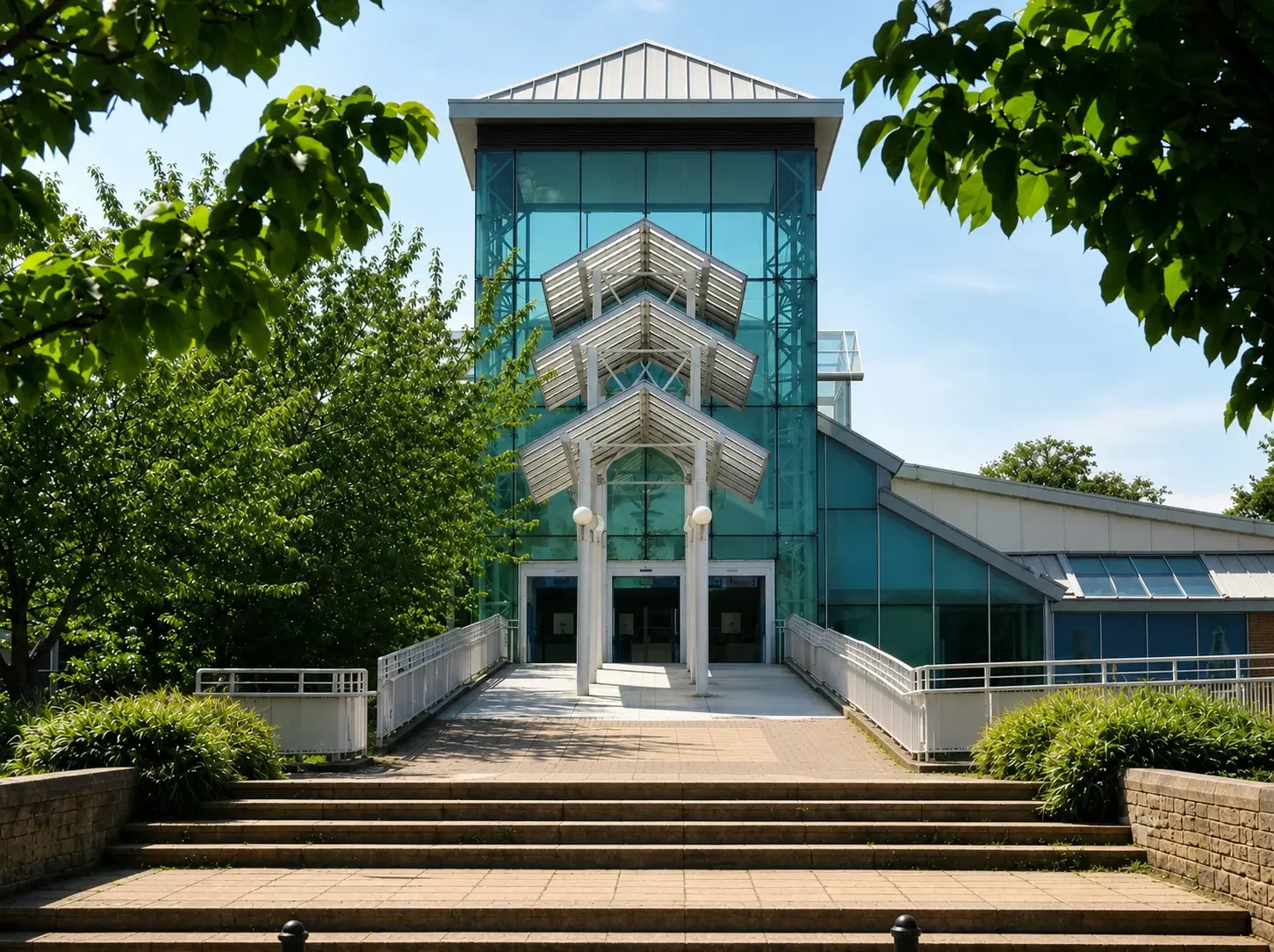
Guildford Spectrum
Leisure
Heat Decarbonisation Plan.
Guildford Spectrum is a five-storey leisure centre and sports complex, hosting four different swimming pools, an ice rink, sports halls, a gym, a 32-lane bowling alley, and multiple restaurants and cafes. The leisure complex was constructed in 1993 and is one of the largest leisure centres in the United Kingdom.
The Challenge:
The council wanted to understand how they could modernise their building, reduce their carbon and extend the life of the services they offer to the public, understanding which systems needed to be updated in order to operate with greater efficiency and reduce their environmental impact.
The Solution:
The condition survey gave a rating for all building services assets and gave an indication of the urgency to replace ageing plant and services. The key recommendations for the HDP included:
The proposed interventions were projected to reduce the Council's carbon emissions from 3,197 tCO₂e in 2019 to 590 tCO₂e in 2030. This is a carbon saving of 82% and will require the decommissioning of all gas-based boilers and the gas-based CHP, which will be replaced with electrically driven heat pumps.
Frequently Asked Questions
-
A Heat Decarbonisation Plan is a detailed, site-specific roadmap for reducing carbon emissions from heating systems in buildings. It identifies how energy is currently used for heating, highlights inefficiencies, and sets out a phased plan of practical, costed measures to transition away from fossil fuels. HDPs are particularly relevant for organisations working toward net zero targets and are often required to access public sector decarbonisation funding.
-
Standard carbon calculators are useful for reporting emissions and taking a high-level view, but they don't tell you how to reduce them in detail.
Salvis energy audits and Heat Decarbonisation Plans go further. They are engineering-led, site-based assessments that translate carbon targets into practical, costed and deliverable actions.
Instead of generic assumptions, Salvis:
Surveys the buildings and all building services
Identifies system-by-system energy and carbon drivers
Accounts for operational, space and electrical constraints
Produces phased, investment-ready decarbonisation plans
Assesses the age of equipment, which will impact the delivery programme
In short, carbon calculators measure the problem. Salvis delivers the solution.