
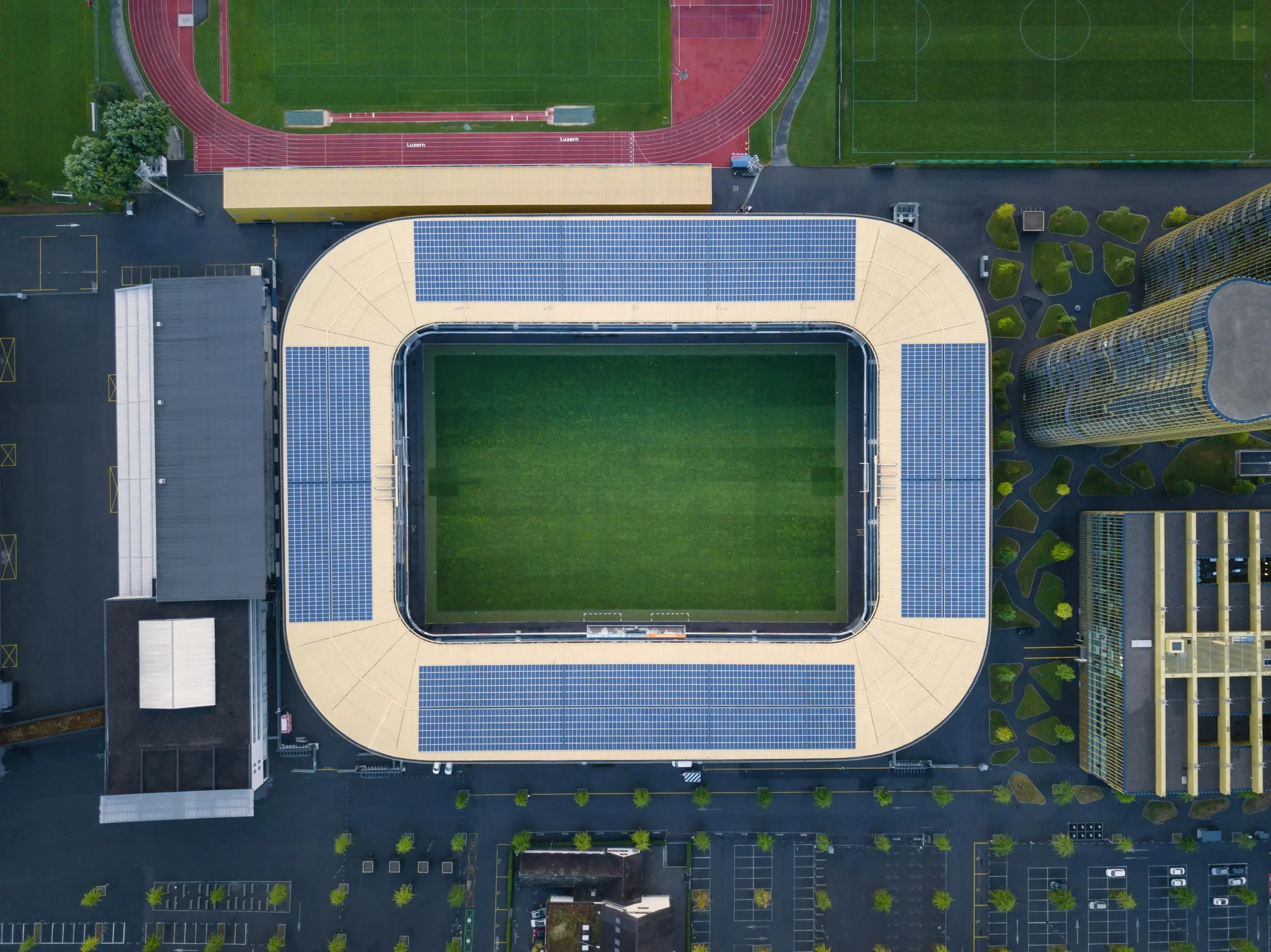

Football is more than a game. It's a massive logistical operation. While the spotlight stays on the 90 minutes of action, the energy required to power a modern stadium is immense: undersoil heating, high-intensity floodlighting, hospitality suites, broadcast infrastructure, and fan-facing facilities all draw heavily from the grid.
At Salvis, we believe stadiums aren't just energy consumers; they're the perfect candidates for a total net zero transformation. Here's why decarbonising a stadium is both a unique engineering challenge and a significant commercial opportunity.

THE 90-MINUTE SPIKE: MANAGING EXTREME PEAK DEMAND
Unlike an office building or factory with relatively steady energy consumption, a stadium operates in extremes. For the majority of the year, it sits largely unused, but on matchdays and event days, energy demand spikes dramatically as floodlights, HVAC, catering, AV systems, and crowd management all come online simultaneously.
This "peak-and-trough" profile creates serious challenges for grid management. Without a smart energy strategy, clubs face inflated demand charges, inefficient infrastructure, and a carbon footprint that's disproportionately concentrated into a handful of high-intensity days.
UNDERSOIL HEATING: THE HIDDEN CARBON GIANT
Maintaining a football association quality pitch year-round demands enormous amounts of heat. Traditionally, this has been delivered through gas-fired boilers running for extended periods across autumn and winter.
Replacing these with large-scale air source or ground source heat pumps represents one of the single biggest carbon savings a club can achieve. The technology is proven, the ROI is increasingly attractive, and it directly targets one of the largest sources of operational emissions in stadium infrastructure.
"Queen Elizabeth Olympic Park has already demonstrated this at scale, using a district-wide ground source heat pump network to provide heating across the park's venues, replacing conventional gas systems and significantly reducing carbon emissions in the process."
If it can work across an entire Olympic park, it can certainly work for a single stadium.

SOLAR PV: TURNING UNUSED ROOF SPACE INTO A POWER STATION
Stadiums have something most buildings don't: vast expanses of unused roof space. Installing solar PV across a stadium roof doesn't just lower energy bills. It's a visible statement of a club's commitment to sustainability, one that every fan, sponsor, and broadcaster can see.
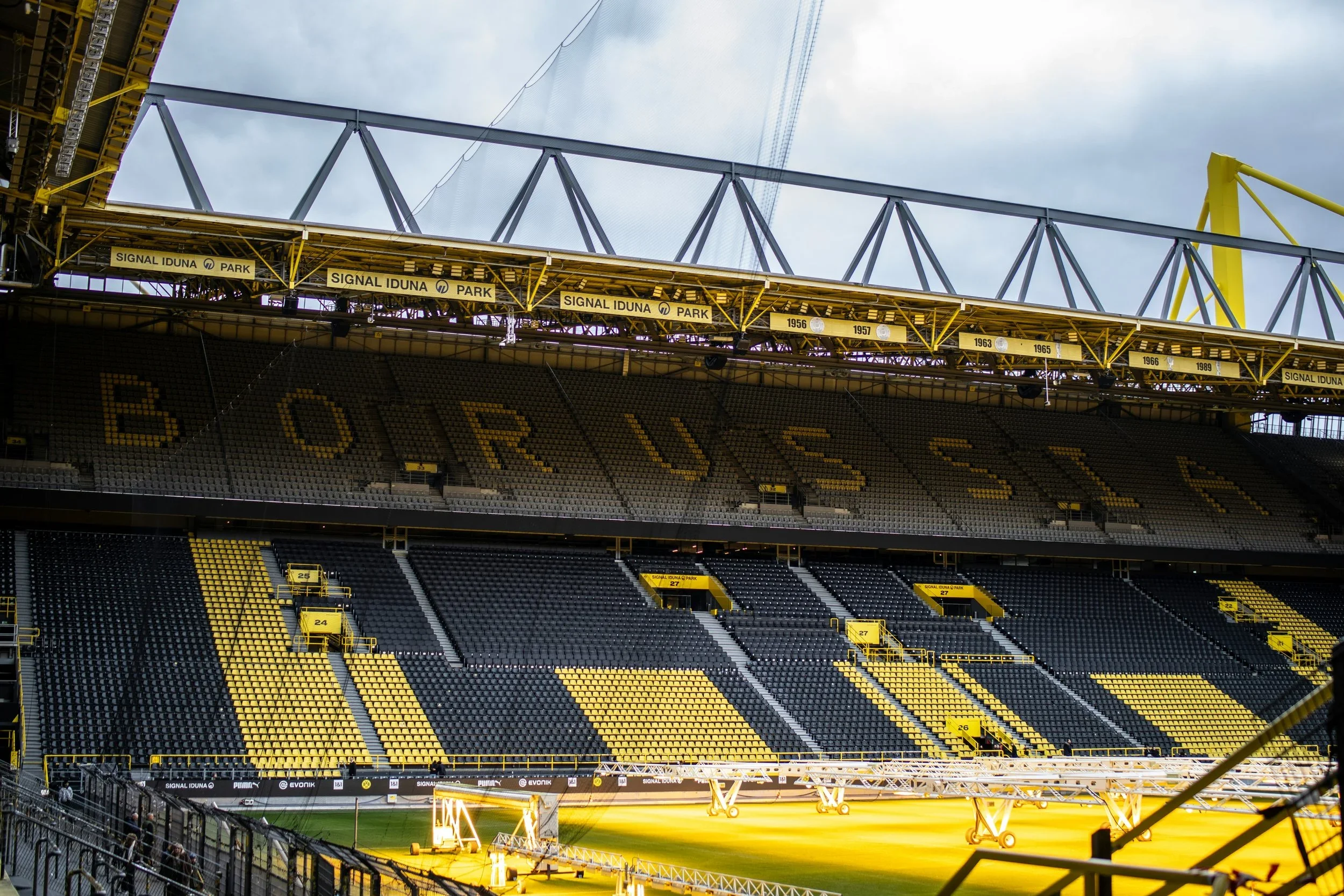
Borussia Dortmund's Signal Iduna Park is proof that this works at scale. In late 2025, the club and energy partner RWE completed what is now certified as the world's most powerful PV system on a stadium roof, with over 11,000 solar modules delivering more than 5 MW of peak capacity.
The installation generates upwards of 4 GWh of clean electricity per year, cutting around 1,700 tonnes of CO₂ annually and enabling Dortmund to cover up to half of the stadium's electricity needs from solar alone. Germany's largest stadium is now also its greenest.
The benefits extend well beyond optics. Solar generation reduces reliance on the grid during peak periods, and when paired with battery storage, energy captured during quieter weekdays can be deployed on match day. Dortmund is doing exactly this, with a 3.7 MWh battery storage system commissioned alongside the panels to store solar energy for use after dark and during evening fixtures.
A stadium's demand is often low to zero for much of the week, with sharp peaks on matchdays and event days. Without a consistent baseline load, a large portion of the energy generated may simply be exported to the grid rather than consumed on-site. Battery storage helps bridge the gap, though half-hourly electrical data is essential to properly size both the array and the battery system for each venue.
That's not necessarily a bad outcome, as it can generate revenue and turn the stadium into a neighbourhood energy hub, but it does affect the financial return on the investment. Every stadium is different, and getting the engineering right starts with understanding the data.
For club owners and sponsors, the commercial upside is clear regardless. Improved ESG credentials strengthen partnerships and future-proof the business, and a rooftop array visible to every matchday broadcaster is marketing that pays for itself.
WHY CLUBS SHOULD ACT NOW
Beyond the environmental imperative, there's a compelling commercial case for stadium decarbonisation. Rising energy costs, tightening regulations, and growing pressure from fans, sponsors, and governing bodies all point in the same direction.
Quick wins may include:
These interventions can deliver measurable cost savings while contributing to broader net zero targets.
THE BOTTOM LINE
Decarbonising a stadium demands a whole-system approach, integrating mechanical, electrical, and strategic planning into a single, cohesive plan. At Salvis, we help infrastructure owners move to net zero without compromising performance, user experience, or operational reliability.
HOW SALVIS CAN HELP
We work with venue operators to develop practical, data-driven decarbonisation strategies. Our services include:
READY TO KICK OFF YOUR STADIUM'S DECARBONISATION JOURNEY?
Every stadium is different, and getting the engineering right starts with understanding the data. Get in touch with the Salvis team to discuss how we can help your venue move towards net zero.