Heat Pumps Aren't Always the Answer: Low-Carbon Heating Starts With the Building
 by Alan Barber
Heat pumps are a central part of building decarbonisation, and in many cases they are the right choice. However, selecting the technology before understanding the building can result in incorrectly sized plant, emitters that cannot deliver the required output, and electrical demand the site cannot support.
Good low-carbon heating design starts with the building. This article covers the key factors to assess before committing to a heat pump.
Start with the actual demand
Installed plant capacity is not a reliable measure of what a building needs. Changes in occupancy, use and fabric over a building's life, combined with original design margins, mean existing plant can differ significantly from the current load. Replacing like-for-like risks carrying those differences forward.
Dynamic thermal modelling establishes peak heating and cooling loads from the building's geometry, fabric, occupancy and usage profiles. At a 4,915 m² local authority office building, Salvis's IES VE modelling put peak cooling load at 539 kW against 660 kW of installed chilled-water capacity.
Compare the options
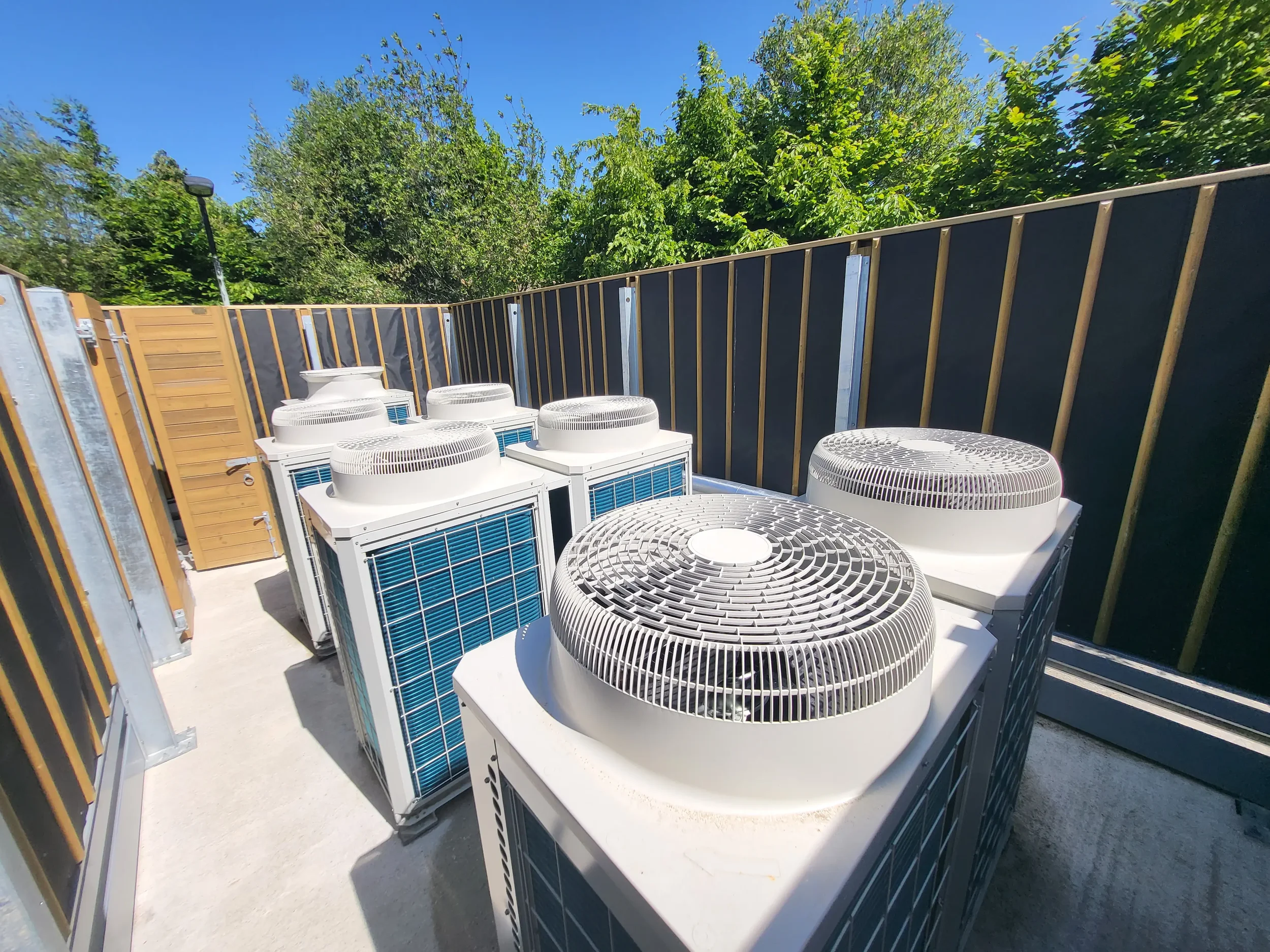
"Heat pump" covers a range of technologies. Air source, ground source, hybrid and VRF systems differ in efficiency, space requirements, installation cost and running cost. The right choice depends on heat demand, available land and plant space, heritage constraints and the existing distribution system.
Options should be compared side by side at feasibility stage on performance, feasibility and long-term running cost. At a Grade II listed heritage and events venue, Salvis compared air source, ground source and a hybrid air source and electric boiler system before ground source was selected.
Design the whole system
Heat pump efficiency reduces as flow temperature increases. Emitters and pipework sized for a high-temperature boiler system may not deliver the required output at the lower flow temperatures a heat pump runs at most efficiently. Replacing the heat source without assessing the rest of the system can leave a building underheated or a heat pump running inefficiently.
Factors to assess include:
- Emitter output at the design flow temperature
- Distribution pipework and system operating temperatures
- Building heat demand and fabric performance
- Plant sizing
- Electrical supply capacity
- Controls
- Plant space and architectural constraints
At the same listed venue, the radiator system was upgraded as part of the ground source heat pump installation, which serves a 125 kW heat load from 18 boreholes.
Check electrical capacity early
Electrifying heat moves load from the gas supply to the electrical supply. On larger sites, available import capacity can become a key constraint, and any upgrade needs to be identified at feasibility stage rather than once the design is fixed.
For a major regional acute and specialist hospital estate, Salvis's heat decarbonisation plan indicated a future requirement of 22,300 kVA against a maximum import capacity of 13,200 kVA at the time of the plan.
Retain what still works
Decarbonisation does not require every system to be replaced. Where existing equipment is still performing, retaining it can reduce cost and disruption. Fabric upgrades should be tested in the same way, against cost and impact on the building.
At a local authority headquarters building, Salvis recommended retaining existing heat pump equipment in selected areas and replacing ageing equipment and electric panel heaters with a VRF system. Wall insulation was ruled out due to cost and its impact on architectural features.
Summary
Low-carbon heating design should follow a clear sequence:
- 01Understand the building, its loads and constraints
- 02Model heating and cooling demand
- 03Compare viable technologies
- 04Select the most suitable option
- 05Design the wider system around it
- 06Verify performance after installation
Heat pumps will be the right solution for many buildings. The aim is to confirm that before committing to a design.
How Salvis can help
Salvis provides:
- Low-carbon heating options appraisals
- Heat pump feasibility studies
- IES VE dynamic thermal modelling
- Energy audits & half-hourly data analysis
- Net zero roadmaps & carbon reporting
- Whole-system M&E strategy
Planning a heating replacement?
Contact the Salvis team to discuss a feasibility study before committing to a technology.
Talk to our engineers